
In the rapidly evolving landscape of Australian healthcare, artificial intelligence (AI) is poised to revolutionise decision-making processes, from clinical diagnostics to resource allocation and personalised treatment plans. For the Australian Institute of Health Technology (AIHT), experts in strategic consultancy for AI governance and risk management, effective AI governance is the cornerstone that ensures these transformations are safe, ethical, and equitable. As of December 2025, with the release of the National AI Plan, Australia is charting a course towards responsible AI adoption across sectors, including healthcare. This blog post explores how robust AI governance frameworks enhance transparency, mitigate risks, build trust, and ultimately empower better, evidence-based decisions in healthcare.

A quick guide to ethical and responsible AI governance | TechCrunch
The Evolving Role of AI in Healthcare Decision Making
AI tools are increasingly supporting critical decisions in Australian healthcare. Clinical decision support systems (CDSS) analyse patient data to provide real-time recommendations for diagnosis and treatment, while predictive analytics forecast patient outcomes and optimise hospital workflows. Generative AI assists in administrative tasks, such as ambient scribing during consultations, freeing clinicians to focus on patient care.
These technologies promise enhanced accuracy, efficiency, and personalisation. For instance, AI can process vast datasets to identify patterns that humans might miss, leading to earlier interventions and reduced errors. However, without proper governance, risks like algorithmic bias, lack of transparency (the “black-box” problem), and data privacy breaches can undermine trust and lead to suboptimal or harmful decisions.

Leveraging AI and Big Data for Decision-Making in Healthcare …
Key Elements of AI Governance in Healthcare
AI governance encompasses policies, processes, and structures to ensure responsible development, deployment, and monitoring of AI systems. In Australia, this includes alignment with Australia’s AI Ethics Principles, which emphasise fairness, privacy, transparency, and accountability.
Core components include:
- Risk Assessment and Management: Classifying AI applications by risk level, as per Therapeutic Goods Administration (TGA) guidelines for software as a medical device (SaMD).
- Human Oversight: Mandating “human-in-the-loop” for high-stakes decisions to prevent automation bias.
- Transparency and Explainability: Requiring explainable AI (XAI) so clinicians understand how decisions are derived.
- Bias Mitigation and Equity: Ensuring diverse training data to avoid disparities, particularly for underrepresented groups like Indigenous Australians.
- Data Governance and Privacy: Compliance with the Privacy Act 1988 and recent amendments for automated decision-making.
These elements, highlighted in the 2025 Safe and Responsible Artificial Intelligence in Health Care report, transform decision-making by providing safeguards that foster confidence in AI outputs.
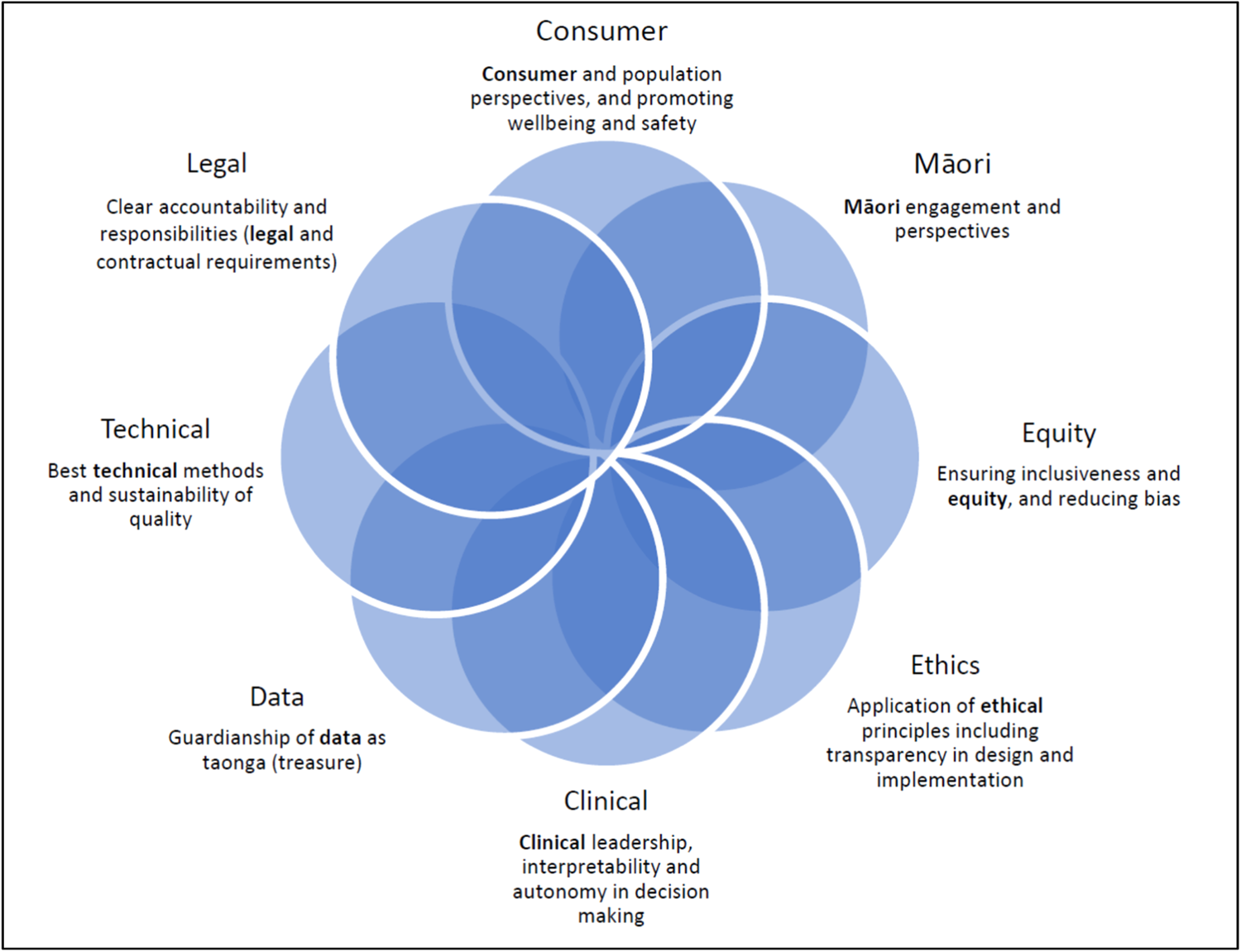
An example of governance for AI in health services from Aotearoa …
How Governance Enhances Decision-Making Processes
Strong AI governance directly improves healthcare decisions in several ways:
- Increased Accuracy and Reliability: Governance mandates rigorous validation and post-market monitoring, reducing errors from model drift or poor generalisability.
- Faster, Evidence-Based Decisions: With transparent algorithms, clinicians can integrate AI insights quickly, as seen in predictive tools for patient deterioration.
- Ethical and Patient-Centred Outcomes: Frameworks prioritise informed consent and equity, ensuring decisions respect patient autonomy and reduce disparities.
- Accountability and Learning: Clear liability pathways and incident reporting enable continuous improvement, turning AI into a learning system.
Studies and frameworks, such as those from the Australian Commission on Safety and Quality in Health Care (ACSQHC), show that governed AI supports “triadic care”—collaborative decision-making between clinicians, patients, and AI—leading to better adherence and satisfaction.

Generative AI in Healthcare Leadership | The Healthcare Executive
Australian Initiatives and Frameworks in 2025
Australia’s approach is risk-based and sector-specific. The National AI Plan, launched in December 2025, emphasises voluntary standards, workforce training, and a new AI Safety Institute to monitor developments.
In healthcare:
- The Department of Health’s 2025 review recommends targeted enhancements to existing laws rather than new comprehensive legislation.
- ACSQHC guides promote safe AI use, including scenarios for image interpretation and ambient scribes.
- Ongoing multimethod studies are developing organisation-level governance frameworks, informed by stakeholder interviews and international best practices.
- The Australian Alliance for Artificial Intelligence in Healthcare (AAAiH) Roadmap advocates for national coordination on workforce, regulation, and safety.
These initiatives ensure AI governance adapts to emerging technologies like generative AI, transforming decisions from reactive to proactive and predictive.
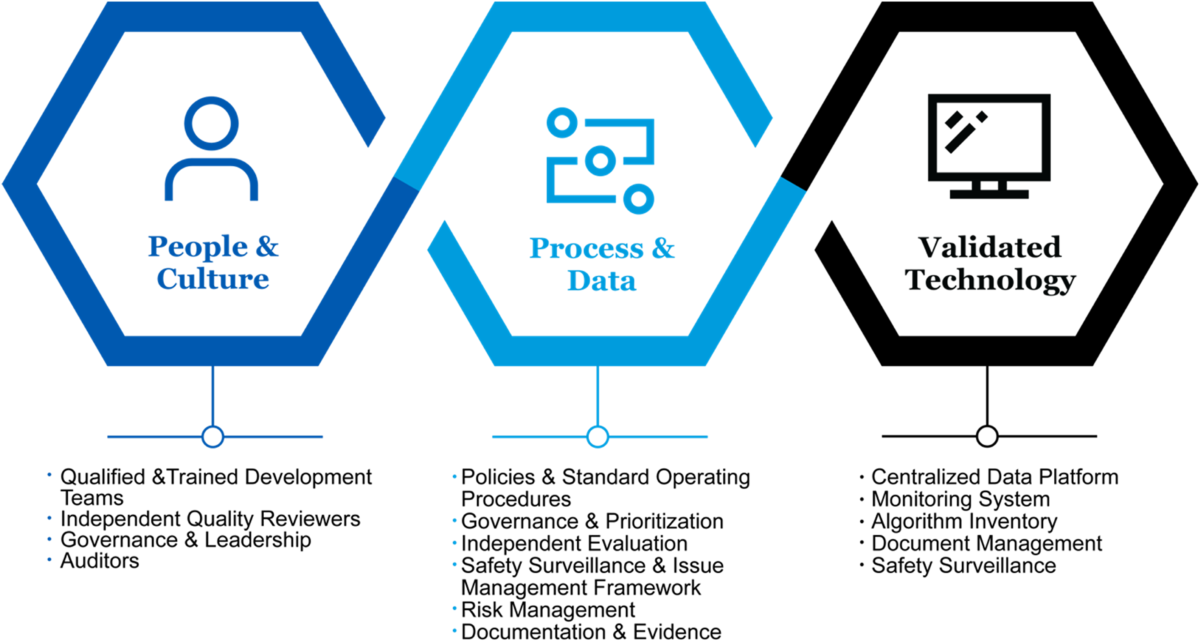
Implementing quality management systems to close the AI …
Challenges and the Path Forward
Despite progress, challenges remain: regulatory gaps for non-SaMD AI, workforce upskilling needs, and ensuring sovereignty over local data and models. Public trust is crucial, with surveys indicating concerns over bias and privacy.
Future directions include incentives for Australia-specific AI development, enhanced education, and international alignment. AIHT supports healthcare leaders in implementing tailored governance strategies to navigate these complexities.
Conclusion
AI governance is not a barrier but a catalyst for transforming healthcare decision-making in Australia. By embedding ethics, accountability, and safety, it unlocks AI’s potential for more precise, equitable, and efficient decisions—ultimately improving patient outcomes and system resilience. As the National AI Plan takes shape, collaborative efforts among regulators, clinicians, and experts like those at AIHT will ensure Australia leads in responsible AI-driven healthcare.
References
- National AI Plan (2025). Department of Industry, Science and Resources. https://www.industry.gov.au/publications/national-ai-plan
- Safe and Responsible Artificial Intelligence in Health Care – Legislation and Regulation Review Final Report (2025). Department of Health and Aged Care. https://www.health.gov.au/sites/default/files/2025-07/safe-and-responsible-artificial-intelligence-in-health-care-legislation-and-regulation-review-final-report.pdf
- Developing an AI Governance Framework for Safe and Responsible AI in Health Care Organizations (2025). JMIR Research Protocols. https://www.researchprotocols.org/2025/1/e75702
- A National Policy Roadmap for Artificial Intelligence in Healthcare (2023, updated). Australian Alliance for Artificial Intelligence in Healthcare. https://www.mq.edu.au/__data/assets/pdf_file/0005/1281758/AAAiH_NationalAgendaRoadmap_20231122.pdf
- Responsible use of AI in healthcare: an Australian perspective (2025). AI and Ethics. https://link.springer.com/article/10.1007/s43681-025-00892-5
- Australia’s AI Ethics Principles. Department of Industry, Science and Resources. https://www.industry.gov.au/publications/australias-artificial-intelligence-ethics-principles
- AI Clinical Use Guides (2025). Australian Commission on Safety and Quality in Health Care. https://www.safetyandquality.gov.au/publications-and-resources/resource-library/nsqhs-standards-guide-healthcare-services
Leave a Reply