
In the complex and high-stakes environment of modern medicine, effective risk management is essential for ensuring patient safety, improving outcomes, and maintaining operational resilience. For the Australian Institute of Health Technology (AIHT), which provides strategic consultancy in health technology governance and risk, robust risk management strategies are particularly vital in an era of digital transformation, workforce challenges, and emerging threats like cybersecurity. Drawing from national standards and international best practices, this blog post outlines the top strategies for effective risk management in Australian healthcare settings. These approaches align with frameworks from the Australian Commission on Safety and Quality in Health Care (ACSQHC) and help mitigate clinical, operational, and strategic risks.
:max_bytes(150000):strip_icc()/methods-handling-risk-quick-guide.asp_final-c386ed66ca654c3f8d6d14db0818183b.jpg)
Understanding the 5 Basic Risk Management Methods for Better Health
Establish a Comprehensive Risk Management Framework
The foundation of effective risk management begins with a structured framework. In Australia, the National Safety and Quality Health Service (NSQHS) Standards, particularly the Clinical Governance Standard, mandate a systematic approach to identifying, assessing, and mitigating risks. Healthcare organisations should adopt ISO 31000:2018 Risk Management Guidelines, which provide principles for integrating risk management into governance, strategy, and operations.
Key elements include defining risk appetite, establishing clear accountability, and integrating clinical and non-clinical risks. The ACSQHC recommends using a risk analysis matrix to evaluate likelihood and consequence, categorising risks from low to extreme. This proactive framework ensures risks are not siloed but addressed organisation-wide.

Clinical Governance — STIA – Schema Therapy Institute Australia
Foster a Strong Safety Culture and Open Reporting
A just culture that encourages reporting of incidents, near misses, and good catches is crucial. Healthcare providers should promote an environment where staff feel empowered to speak up without fear of blame. The ACSQHC emphasises capturing near misses as opportunities to prevent future harm.
Best practices include regular safety huddles, anonymous reporting systems, and learning from events through root cause analysis (RCA) or Failure Mode and Effects Analysis (FMEA). In 2025, with increasing cybersecurity risks highlighted in industry reports, fostering transparency extends to digital threats, ensuring prompt reporting of potential breaches.

Healthcare Risk Management – Xenon Anesthesia of Colorado
Conduct Regular Risk Assessments and Screening
Proactive identification is key. Implement routine risk screening for patients upon admission, covering falls, pressure injuries, malnutrition, and delirium. The Comprehensive Care Standard requires evidence-based tools for assessment.
For organisational risks, conduct annual audits and environmental scans. In Australian contexts, this includes planning for emergencies like pandemics or natural disasters, as outlined in NSQHS guidelines. Emerging risks in 2025, such as AI-related biases or workforce shortages, should be prioritised in assessments.
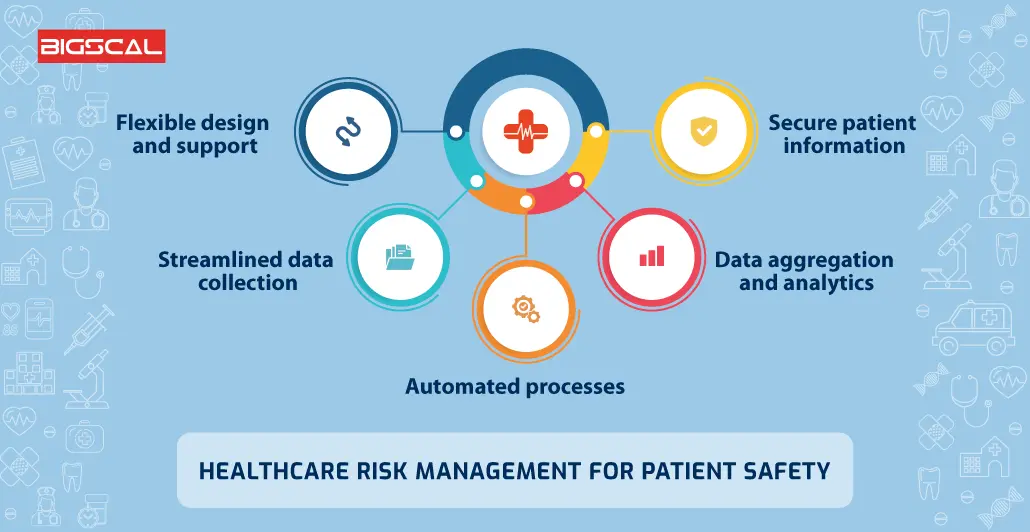
Hospital Risk Management Software with These Useful Tips
Provide Ongoing Education and Training
Continuous professional development builds risk awareness. Train staff on risk identification, mitigation techniques, and compliance with standards like hand hygiene and infection control. Simulation-based training for high-risk scenarios, such as sepsis management, has proven effective.
Incorporate modules on cybersecurity and digital health risks, given the rise in ransomware attacks. AHPRA and ACSQHC guidelines stress that practitioners must understand their accountability when using new technologies.
Enhance Communication and Interdisciplinary Collaboration
Effective risk management relies on clear communication channels. Implement structured handovers (e.g., ISBAR) and interdisciplinary meetings to discuss risks. Cross-functional teams, including clinicians, managers, and IT specialists, ensure holistic approaches.
In rural and regional settings, where resources may be limited, telehealth and shared risk registers can bridge gaps.
Leverage Technology and Data Analytics
Digital tools, such as Risk Management Information Systems (RMIS), automate tracking and reporting. Predictive analytics can forecast risks like hospital readmissions or infection outbreaks.
However, technology introduces new risks—ensure robust cybersecurity measures and compliance with privacy laws. AIHT consultancy often focuses on governing health tech to balance innovation with safety.

59+ Thousand Company Risk Management Royalty-Free Images, Stock …
Monitor, Review, and Continuously Improve
Risk management is iterative. Regularly review the system’s effectiveness through audits, performance metrics, and feedback. Escalate significant risks to governing bodies and adjust strategies based on lessons learned.
Incorporate patient feedback and external benchmarks to drive improvement. The ACSQHC’s risk management approach supports this cycle of monitoring and refinement.
Address Emerging Risks Proactively
In 2025, top risks include cybersecurity, regulatory changes, workforce issues, and AI integration. Strategies involve risk-based compliance, talent retention programs, and ethical AI governance.
For cyber threats, prioritise network security and staff training on phishing.
Conclusion
Implementing these top strategies— from robust frameworks and cultural shifts to technology leverage and continuous improvement—enables healthcare organisations to manage risks effectively, safeguarding patients and staff. At AIHT, we support leaders in tailoring these approaches through expert consultancy, ensuring alignment with Australian standards and emerging challenges. By prioritising risk management, medicine can deliver safer, higher-quality care in an increasingly complex landscape.
References
- Risk management. Australian Commission on Safety and Quality in Health Care. https://www.safetyandquality.gov.au/publications-and-resources/resource-library/nsqpch-standards-guide-healthcare-services/clinical-governance-standard/patient-safety-and-quality-systems/risk-management
- NSQHS Standards Risk management approach. Australian Commission on Safety and Quality in Health Care. https://www.safetyandquality.gov.au/publications-and-resources/resource-library/nsqhs-standards-risk-management-approach
- ISO 31000:2018 Risk management — Guidelines. International Organization for Standardization. https://www.iso.org/standard/65694.html
- Top Healthcare Industry Risks 2025. Protiviti Australia. https://www.protiviti.com/au-en/survey/top-risks-healthcare-industry-2025
- What Is Risk Management in Healthcare? NEJM Catalyst. https://catalyst.nejm.org/doi/full/10.1056/CAT.18.0197
- 10 Risk Management Strategies in Healthcare. Arkenea. https://arkenea.com/blog/risk-management-strategies-in-healthcare/
- Clinical risk management. Victorian Department of Health. https://www.health.vic.gov.au/quality-safety-service/clinical-risk-management
- Risk Management Event Evaluation and Responsibilities. StatPearls – NCBI Bookshelf. https://www.ncbi.nlm.nih.gov/books/NBK559326/
Leave a Reply